[rank_math_breadcrumb]

Tag: Infrared Landscape

  • Pine Breeze Americana

    Pine Breeze Americana

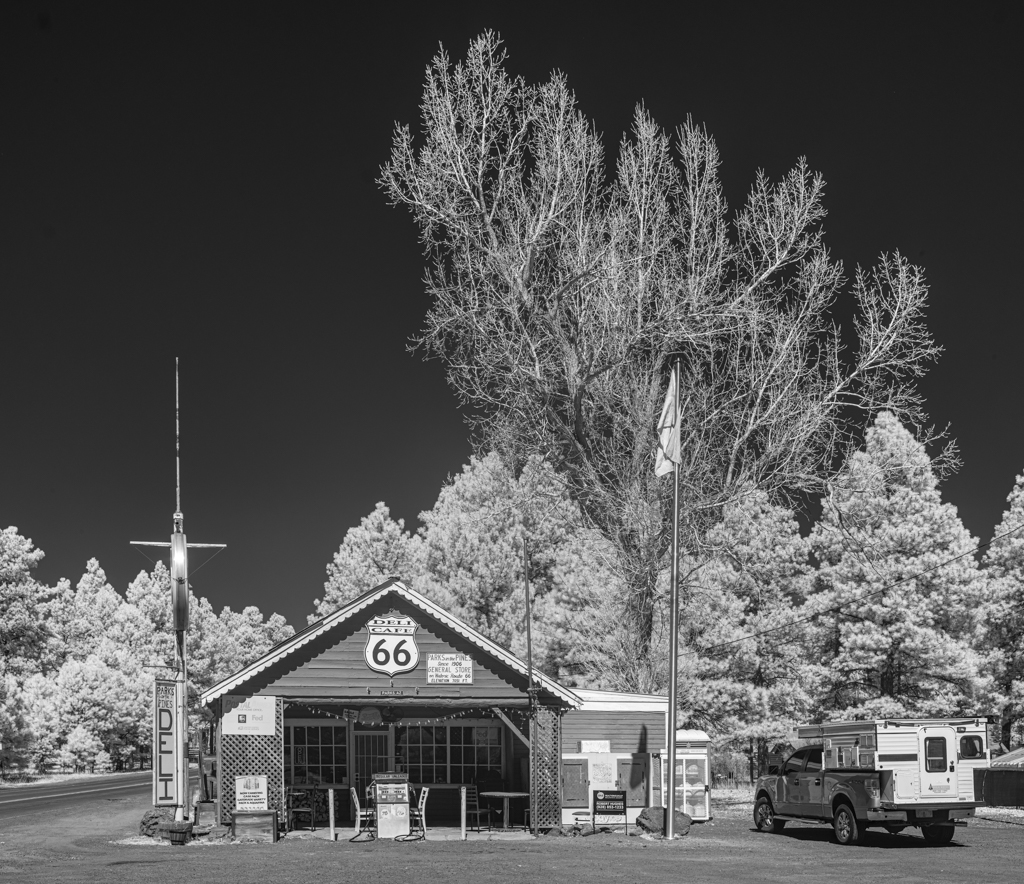
    As part of an ongoing Americana project focused on capturing iconic buildings still in operation, this image presents the historic Pine Breeze Inn—a cherished roadside stop along Historic Route 66 near Parks, Arizona. Captured with an infrared-converted Hasselblad X1D, the image transforms the surrounding pines into glowing white, contrasting starkly with the jet-black sky and lending a surreal, dreamlike atmosphere to this already nostalgic scene.

    The Route 66 shieldclassic deli signage, and rocket-shaped post anchor the building in mid-20th century roadside Americana, where weary travelers once pulled over for coffee, a sandwich, or a quiet break on their journey west. With its wooden porch, vintage pickup, and surrounding forest, the Pine Breeze Inn feels frozen in time—yet still alive and functioning.

    This photograph isn’t just documentation; it’s a tribute to small-town endurance and the visual poetry of the American road. In the language of light and memory, it honors a place where stories pass as frequently as cars once did on the Mother Road.
  • Half Dome in Infrared – A Monochrome Monument of Yosemite

    Half Dome in Infrared – A Monochrome Monument of Yosemite

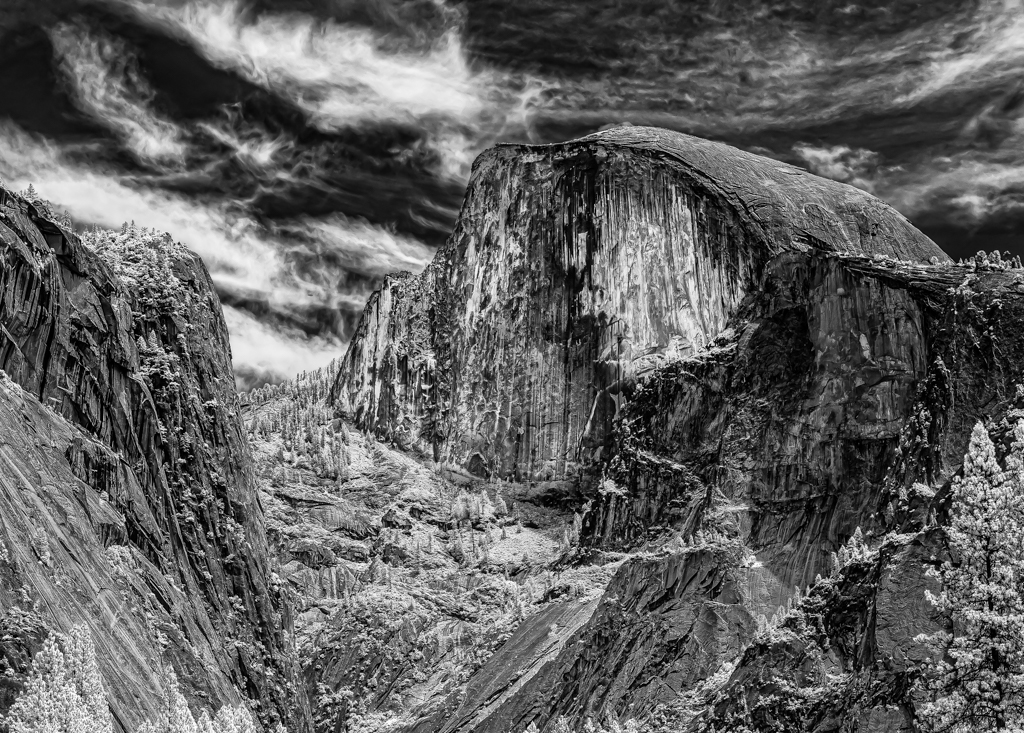
    This black and white infrared photograph captures the awe-inspiring grandeur of Half Dome, Yosemite’s most iconic granite monolith. Shot with an infrared-converted camera, the familiar landscape is transformed into a surreal and hauntingly beautiful scene. The glowing white foliage, rendered ghostlike in infrared light, contrasts sharply with the imposing, textured face of the rock and the swirling, high-altitude clouds above.

    The infrared spectrum pulls unexpected detail and drama from both the sky and stone, revealing the raw power of Yosemite’s terrain in a way traditional color photography simply can’t match. The exaggerated contrast and dreamlike luminance evoke a timeless, almost otherworldly feel—as if the scene belongs to both the past and some distant future.

    This image is not just a documentation of a landmark; it’s a reimagining of a natural wonder through the lens of invisible light.

  • Desert Sentinel – Joshua Tree in Infrared

    Desert Sentinel – Joshua Tree in Infrared

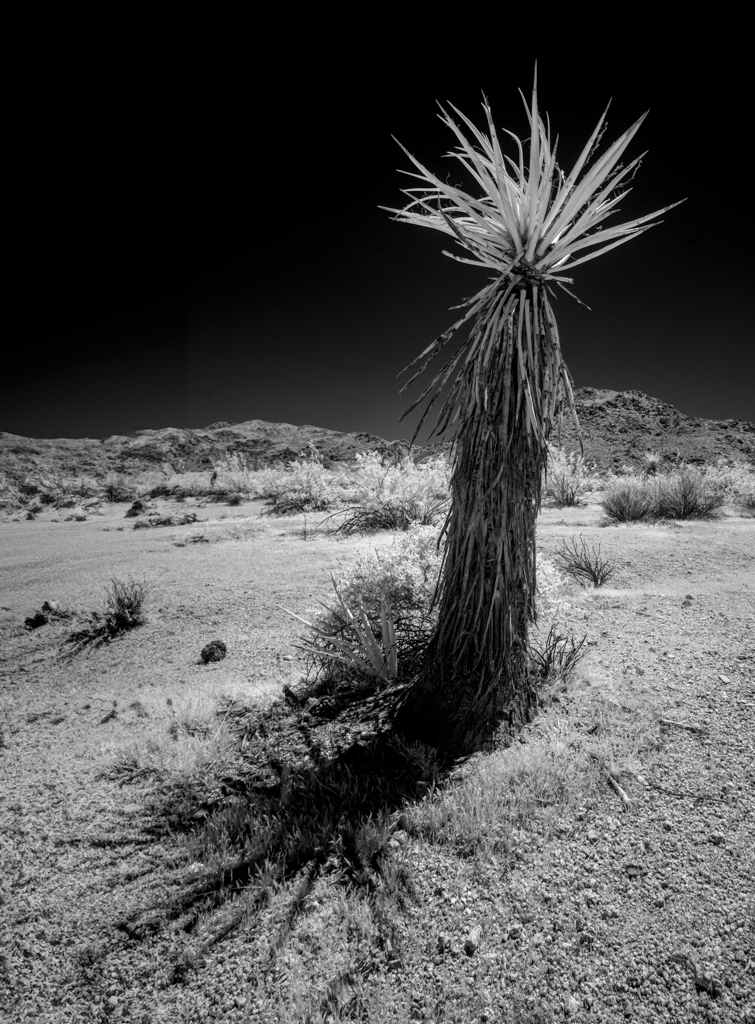
    In the high desert of Joshua Tree National Park, the sun bears down relentlessly, and even the hardiest plants take on an otherworldly beauty. This infrared image transforms the stark reality of the Mojave into something dreamlike—where the sky turns jet black, the scrub glows white, and the yucca tree stands alone like a quiet sentinel.

    Shot with an infrared-converted camera, this photograph highlights the reflective properties of desert flora, exaggerating contrast and revealing textures invisible to the naked eye. The strong midday shadows deepen the drama, while the deep black sky creates a canvas of high-desert minimalism.

    Joshua Tree is a place of extremes—heat and stillness, life and emptiness. This image is part of our Americana Project, capturing the strange beauty and solitude found in some of the most iconic landscapes of the American West.

  • Infrared Light in Moraine Park – Rocky Mountain National Park

    Infrared Light in Moraine Park – Rocky Mountain National Park

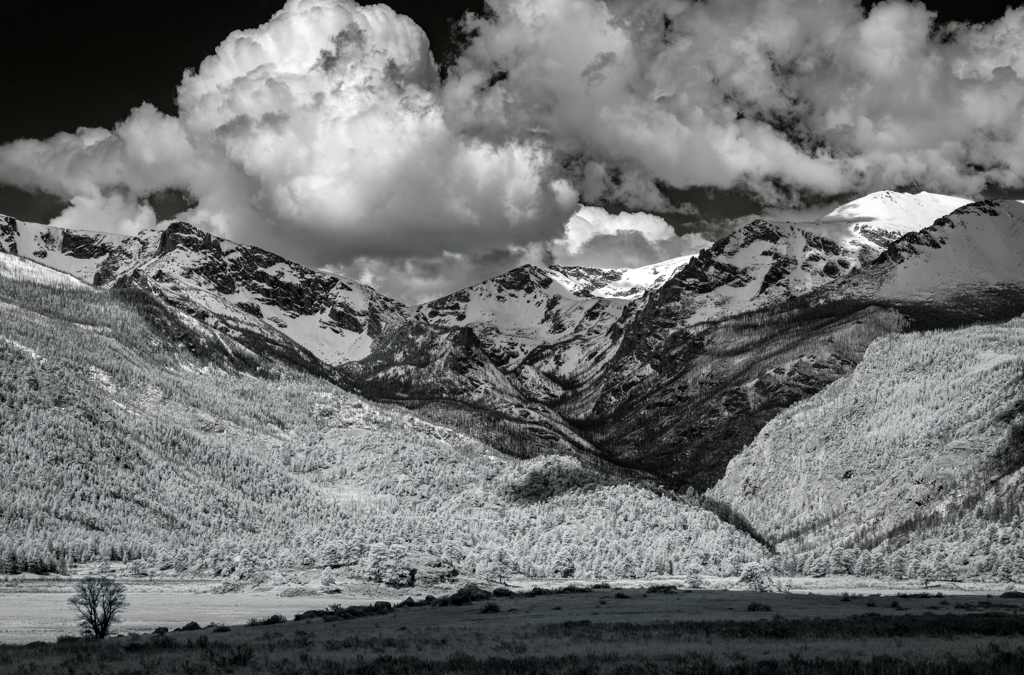
    During my May 2025 trip to Rocky Mountain National Park, I set up near Moraine Park with my infrared-converted camera to capture a different side of the Rockies. From this vantage point, the rugged ridges funnel the eye toward the heart of the Continental Divide, framed by drifting clouds that carried the last breath of winter.

    What infrared does here is transform the familiar into the surreal. The meadows and pines, glowing with that signature silvery light, look almost as though they’ve been dusted with frost, even in spring. Against this brightness, the dark stone faces of the mountains rise like sentinels, their snowfields blending into the luminous IR glow of the forest below.

    The lone tree in the meadow has always caught my eye when I’ve walked this valley — in infrared, it becomes even more symbolic: a quiet anchor in the middle of vastness, dwarfed by scale yet standing apart.

    What I love most about this photograph is the contrast in moods: the dreamlike brilliance of the landscape against the weight of storm clouds rolling overhead. It’s both otherworldly and deeply rooted in place — a reminder that the Rockies are never just one thing, but always a balance of extremes.