[rank_math_breadcrumb]

Category: Landscape Photography

Vistas, mountains, deserts, seascapes, and nature scenes.

  • Mount Dana in Infrared Silence

    Mount Dana in Infrared Silence

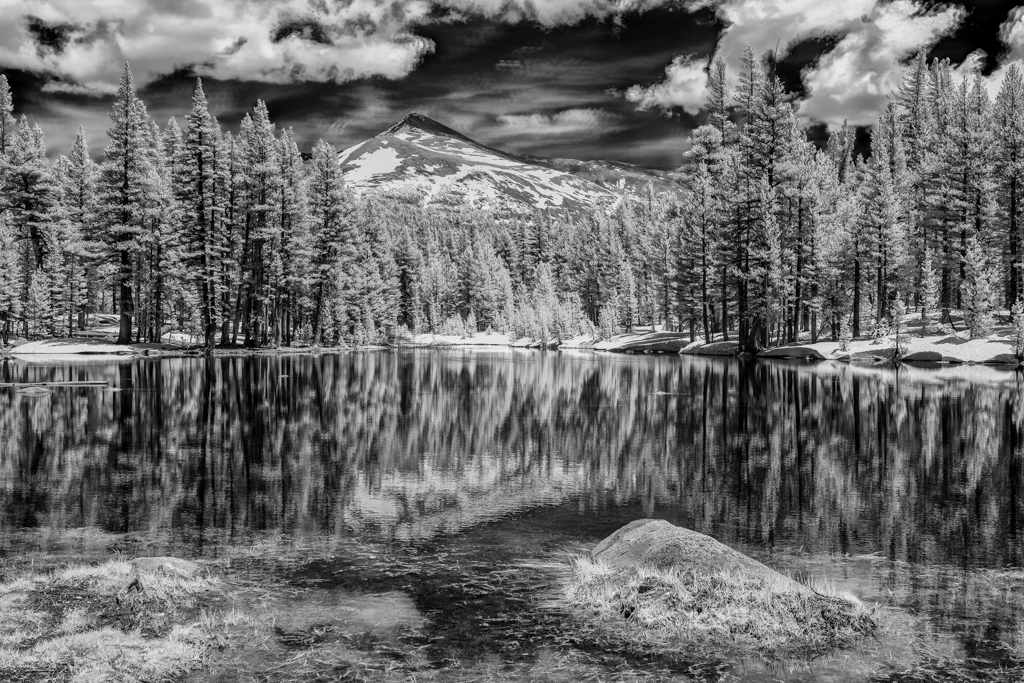
    Captured just off Tioga Road (Highway 120) near the eastern edge of Yosemite National Park, this surreal infrared image reveals the towering granite face of Mount Dana rising above a calm, high-country pond. Shot with an infrared-converted camera, the scene transforms into a luminous dreamscape—where pine trees glow with snow-like brilliance and the sky turns to velvet black, intensifying the drama of this alpine wilderness.

    The pond in the foreground, likely a meltwater pool near Dana Meadows, mirrors the light and textures with quiet clarity. At over 13,000 feet, Mount Dana looms like a sentinel of the Sierra Nevada, its rugged form contrasting with the delicate detail of the illuminated foliage below.

    This photograph is part of an ongoing exploration of Yosemite’s lesser-traveled high country, using infrared light to uncover the hidden energy and ethereal beauty that lies just beyond the visible spectrum. A moment of calm. A monument of stone. A place where time and light speak a different language.
  • Whispers of Half Dome

    Whispers of Half Dome

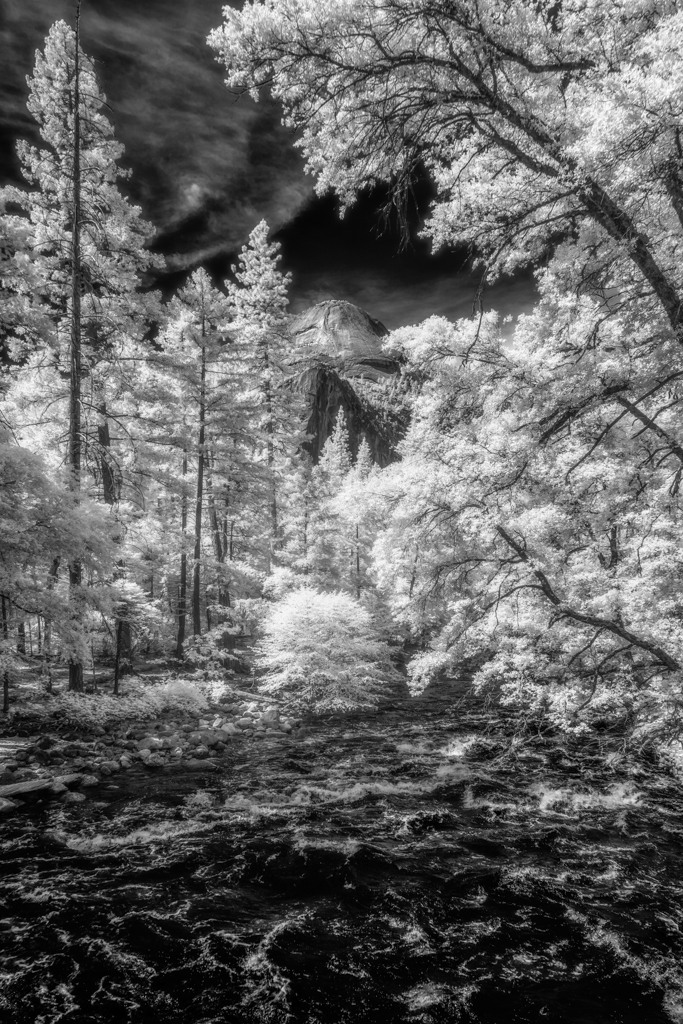
    In this haunting infrared landscape, the unmistakable silhouette of Half Dome rises in the distance, framed by glowing pines and lace-like canopies that shimmer in ethereal white. Captured within Yosemite National Park, the image transforms the iconic view into something almost celestial. The dark, rushing Merced River snakes through the foreground, its textured surface pulling the viewer’s eye upstream toward the radiant forest and the towering granite monolith beyond.

    Shot with an infrared-converted camera, this photograph reveals a hidden spectrum of light, turning chlorophyll-rich leaves into glowing forms and darkening the sky to velvet black. The effect is dreamlike and surreal—rendering a familiar national treasure as though it belongs to another world. Beneath the spectral light, the wilderness feels silent and sacred, as if the trees themselves are holding their breath in reverence to the mountain.

  • Cathedral Illumination

    Cathedral Illumination

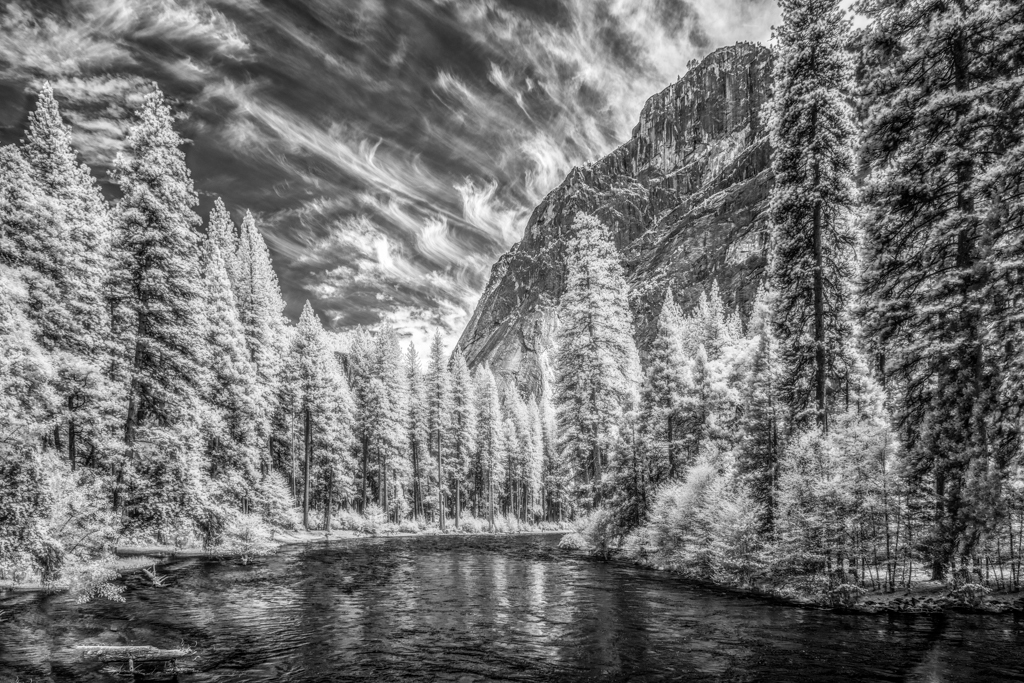
    This dramatic black-and-white infrared photograph captures the awe-inspiring grandeur of Cathedral Rocks rising above the Merced River in Yosemite National Park. Shot with an infrared-converted camera, the towering pines shimmer with an ethereal glow, while the river below reflects the light in soft, silvery patterns. The sky—streaked with wild, swirling cirrus clouds—adds a celestial energy that seems to radiate from the heart of the valley.

    The use of infrared transforms this iconic landscape into something both familiar and otherworldly. The foliage blazes with an icy brilliance, while the granite cliffs loom dark and textural, etched with time. There’s a surreal silence to the scene, as if nature itself has been paused in a moment of timeless reverence. Cathedral Illumination is not just a photograph—it’s a visual hymn to the spirit of Yosemite, seen through a spectrum that reveals what the eye alone cannot.

  • Cathedral Sentinel in Infrared

    Cathedral Sentinel in Infrared

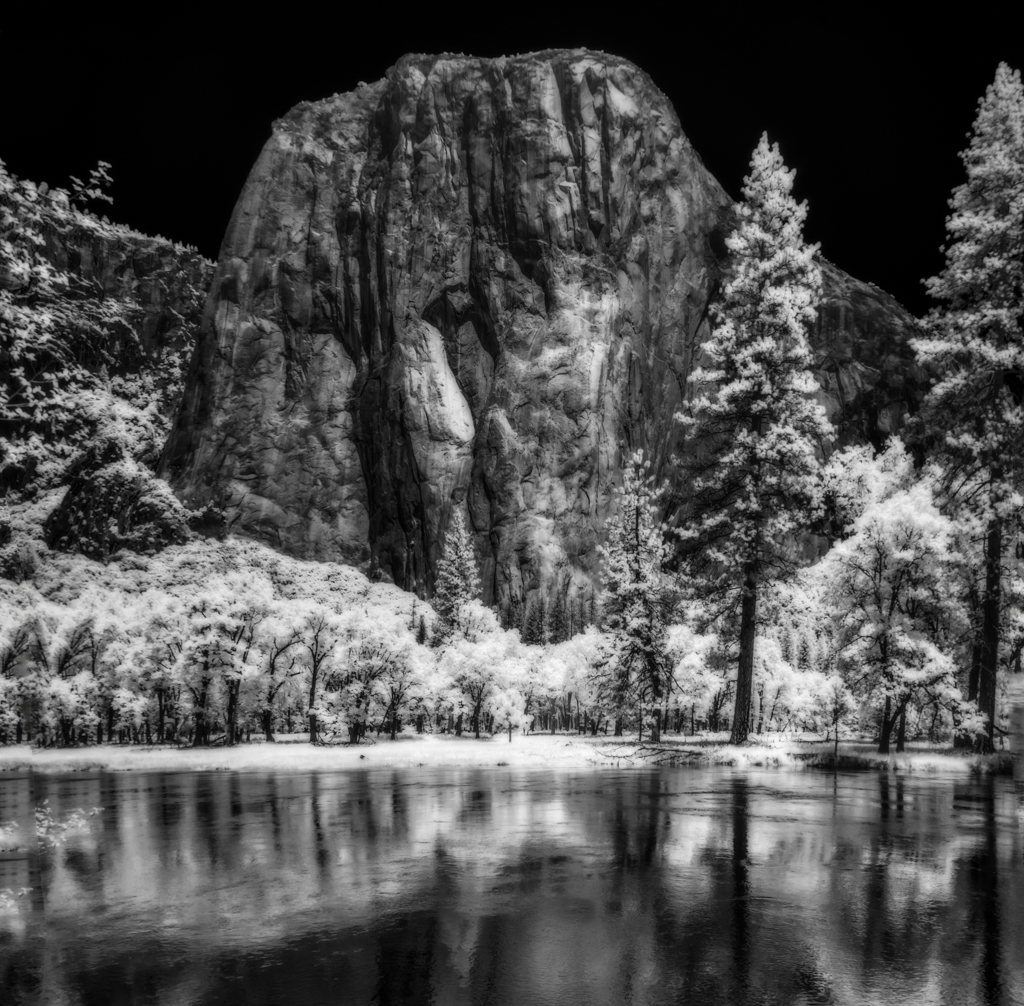
    This ethereal black-and-white image captures the majestic granite face of Cathedral Rock in Yosemite National Park, rendered through the otherworldly lens of infrared photography. Shot with an infrared-converted camera, the photograph transforms the familiar into the surreal: towering pines and valley trees glow in frosted white, their reflected forms shimmering in the stillness of the Merced River below. Above, the rock face stands in stark contrast—its textured, ancient surface looming like a sentinel under a pitch-black sky.

    The infrared spectrum reveals light invisible to the human eye, lending a dreamlike atmosphere to this iconic Western landscape. Shadows deepen, foliage glows, and the scene feels suspended in time—somewhere between vision and memory. The result is a haunting yet peaceful portrayal of Yosemite’s grandeur, as if nature itself were casting a spell in silver and stone.

  • Half Dome in Infrared – A Monochrome Monument of Yosemite

    Half Dome in Infrared – A Monochrome Monument of Yosemite

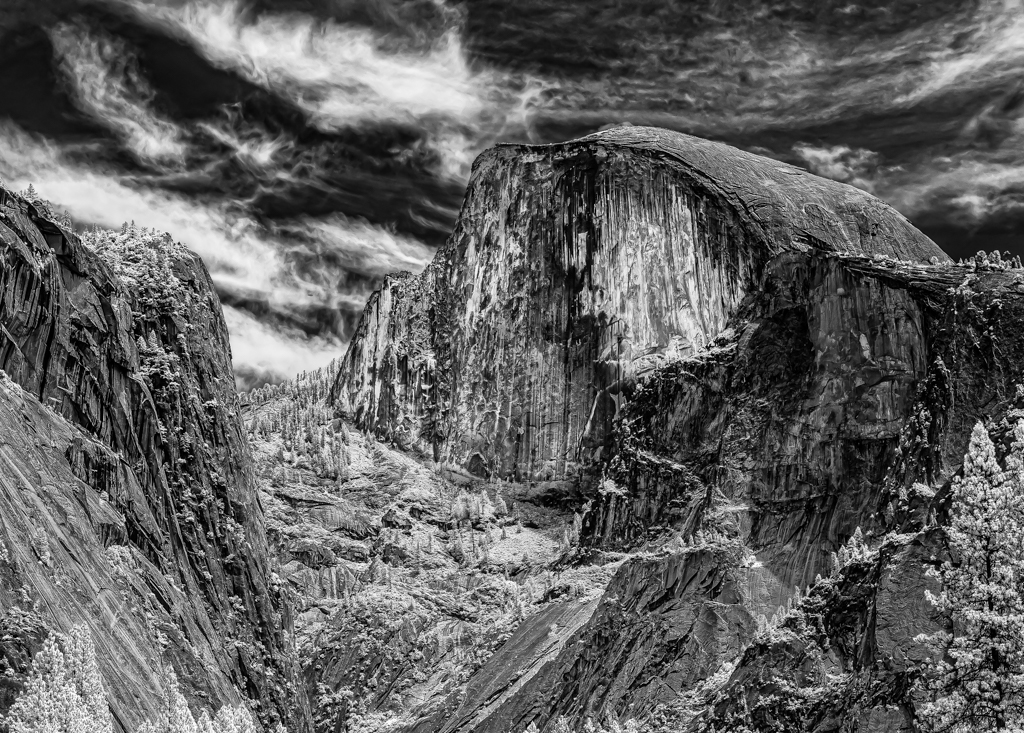
    This black and white infrared photograph captures the awe-inspiring grandeur of Half Dome, Yosemite’s most iconic granite monolith. Shot with an infrared-converted camera, the familiar landscape is transformed into a surreal and hauntingly beautiful scene. The glowing white foliage, rendered ghostlike in infrared light, contrasts sharply with the imposing, textured face of the rock and the swirling, high-altitude clouds above.

    The infrared spectrum pulls unexpected detail and drama from both the sky and stone, revealing the raw power of Yosemite’s terrain in a way traditional color photography simply can’t match. The exaggerated contrast and dreamlike luminance evoke a timeless, almost otherworldly feel—as if the scene belongs to both the past and some distant future.

    This image is not just a documentation of a landmark; it’s a reimagining of a natural wonder through the lens of invisible light.

  • Constellation Park Sepia

    Constellation Park Sepia

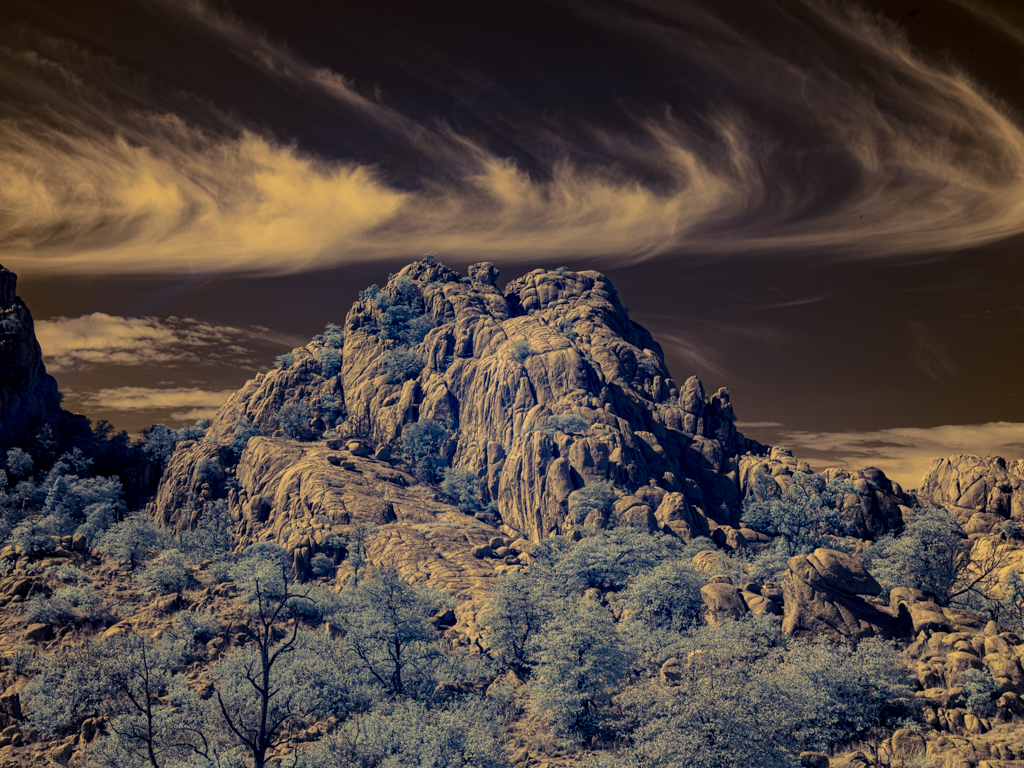
    Captured just outside Sedona, Arizona in Constellation Park, this surreal landscape was photographed using a modified Hasselblad X1D for infrared photography. In this ethereal infrared image, the rugged rock formations glow with otherworldly warmth, while the foliage below—normally rich desert greens—takes on ghostly, cool tones of blue and silver. Above it all, high-altitude cirrus clouds stretch dramatically across a deepened sky, their motion frozen in time like brushstrokes on a vast canvas.

    Infrared photography reveals what the eye cannot see, and in this case, it transforms the Arizona desert into something almost lunar—familiar in form yet alien in mood. The quiet strength of the rocks, combined with the swirling sky and spectral trees, evokes a dreamlike quality that feels more myth than memory.

  • Constellation Park

    Constellation Park

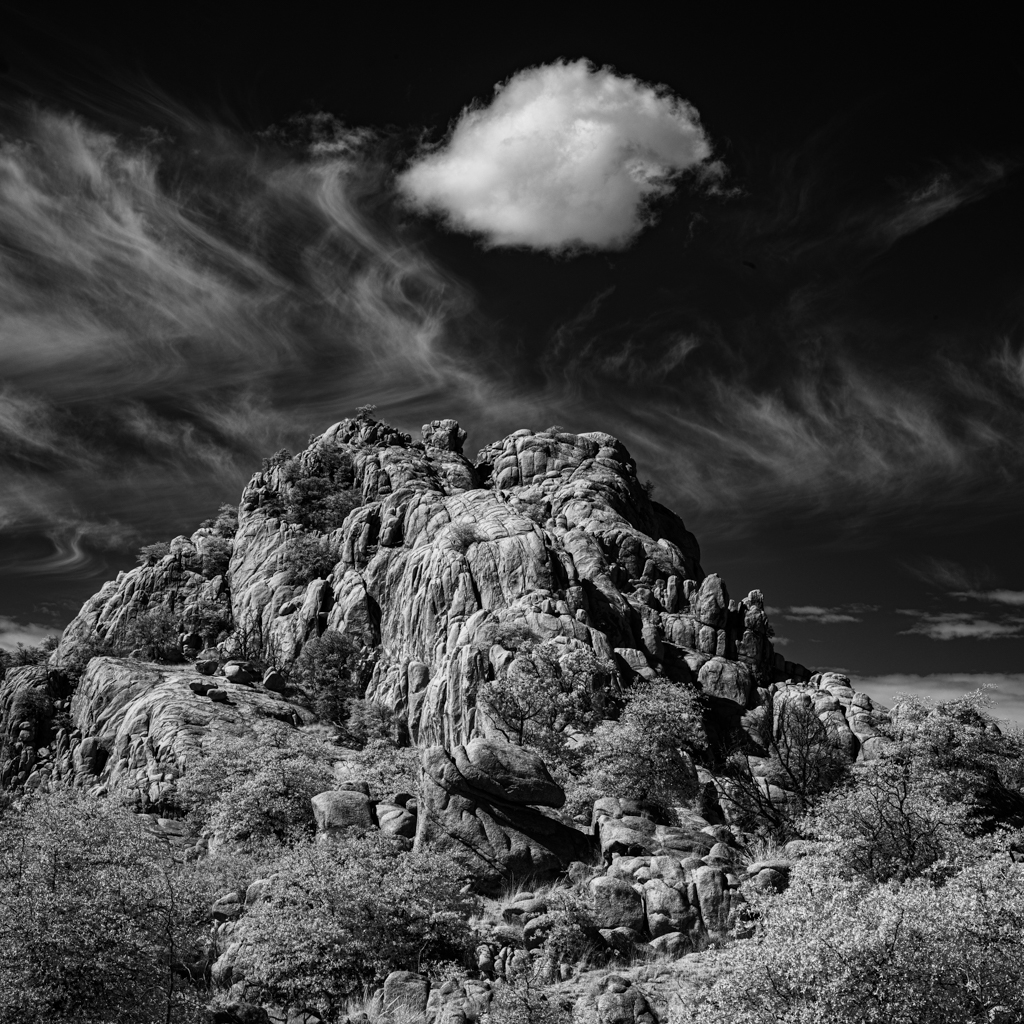
    Captured just outside Sedona, Arizona in Constellation Park, this surreal landscape was photographed using a modified Hasselblad X1D for infrared photography. In this ethereal infrared image, the rugged rock formations glow with otherworldly warmth, while the foliage below—normally rich desert greens—takes on ghostly, cool tones of blue and silver. Above it all, high-altitude cirrus clouds stretch dramatically across a deepened sky, their motion frozen in time like brushstrokes on a vast canvas.

    Infrared photography reveals what the eye cannot see, and in this case, it transforms the Arizona desert into something almost lunar—familiar in form yet alien in mood. The quiet strength of the rocks, combined with the swirling sky and spectral trees, evokes a dreamlike quality that feels more myth than memory.

  • Solitary Sentinel – Joshua Tree in Infrared

    Solitary Sentinel – Joshua Tree in Infrared

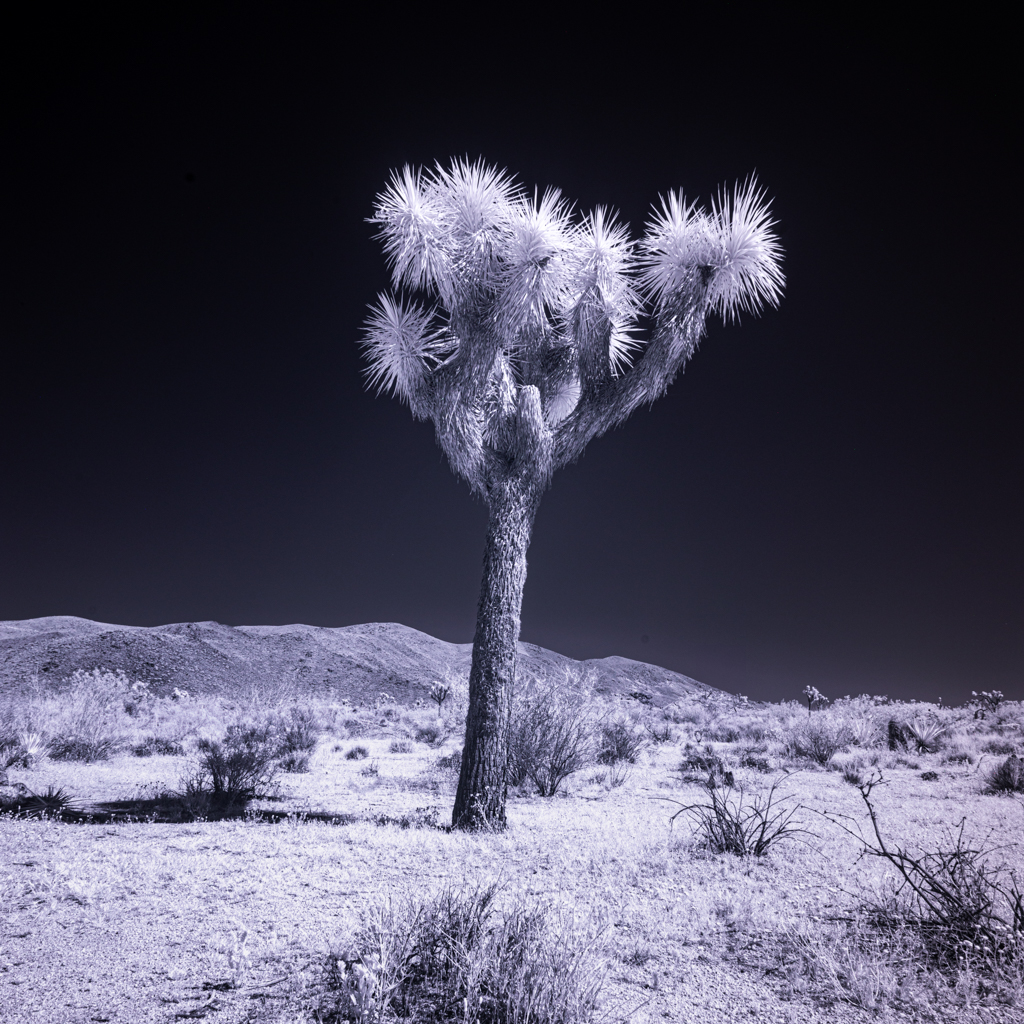
    Captured in the heart of Joshua Tree National Park, this surreal image transforms the desert landscape into something otherworldly. Using a Nikon D800 converted for infrared photography, I was able to reveal the stark beauty of the desert in an entirely new light.

    The Joshua Tree, a symbol of resilience and wild elegance, stands alone against a backdrop of gently rolling hills and a nearly black sky—an effect created by the deep infrared spectrum. The spiky foliage glows with an ethereal, icy tone, while the texture of the bark and desert scrub becomes hyper-detailed, giving the scene an almost alien quality.

    Infrared photography at Joshua Tree offers a dramatic reinterpretation of the familiar. Where the sun-bleached sand and blue skies typically dominate, the infrared view emphasizes contrast and mood, stripping away color to reveal form, light, and shadow in their purest expressions.

    This image, for me, captures not just a moment in the Mojave—but the essence of isolation, strength, and beauty in one of America’s most unique landscapes.

  • The Long Road – Monument Valley in Infrared

    The Long Road – Monument Valley in Infrared

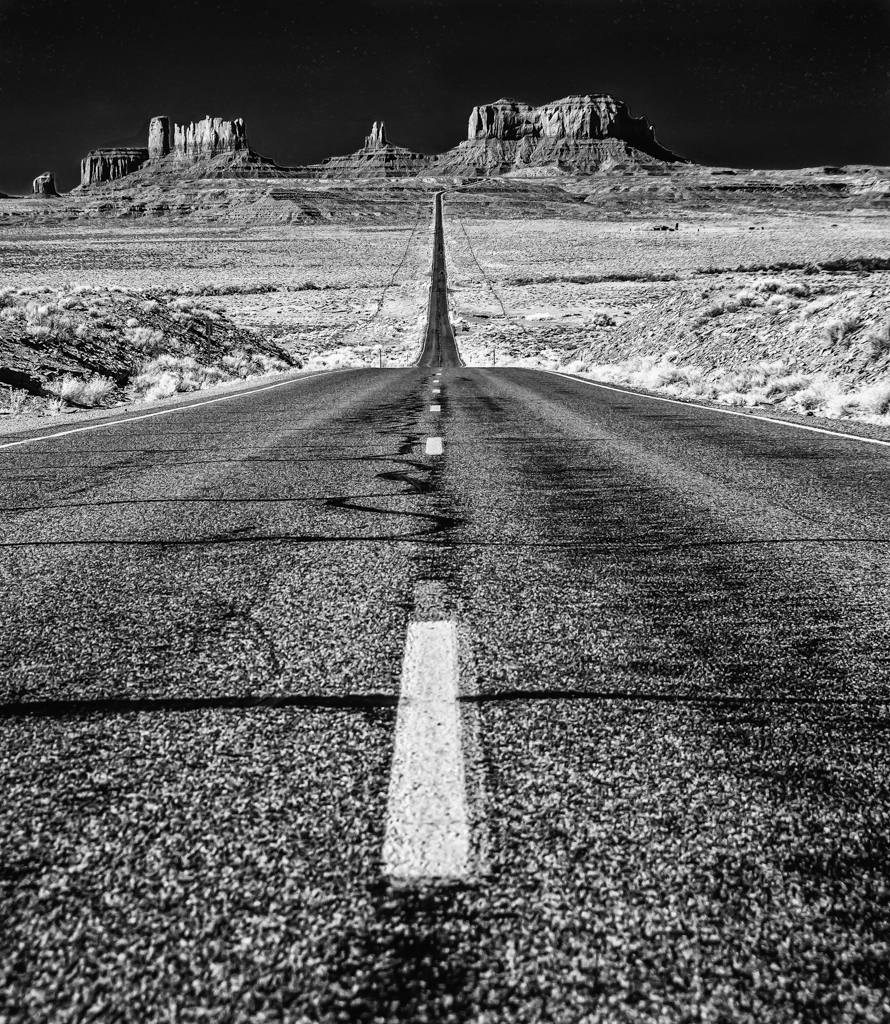
    Shot with a Nikon D2X converted for infrared photography, this image captures the legendary view from Forrest Gump Point on Highway 163—where endless road meets timeless landscape. This stretch between Monument Valley and Mexican Hat, Utah, is etched in cinematic history as the spot where Forrest Gump famously stopped running, with the buttes of Monument Valley standing solemn in the distance.

    In the infrared spectrum, the familiar transforms. The asphalt shimmers with alien intensity, while the desert terrain turns ghostly white, and the sky deepens into a void of stark black. Monument Valley’s towering sandstone formations rise like silent sentinels from another world, frozen in time and shadow.

    The composition—perfectly centered on the broken white line—pulls the viewer down the road into the surreal horizon, symbolizing both a journey through the American West and a passage through visual imagination.

    This isn’t just a photograph of a place made famous by Hollywood—it’s a reimagining of an icon, filtered through the lens of infrared light and a camera that still holds up in a digital world driven by megapixels.

  • Infrared Light in Moraine Park – Rocky Mountain National Park

    Infrared Light in Moraine Park – Rocky Mountain National Park

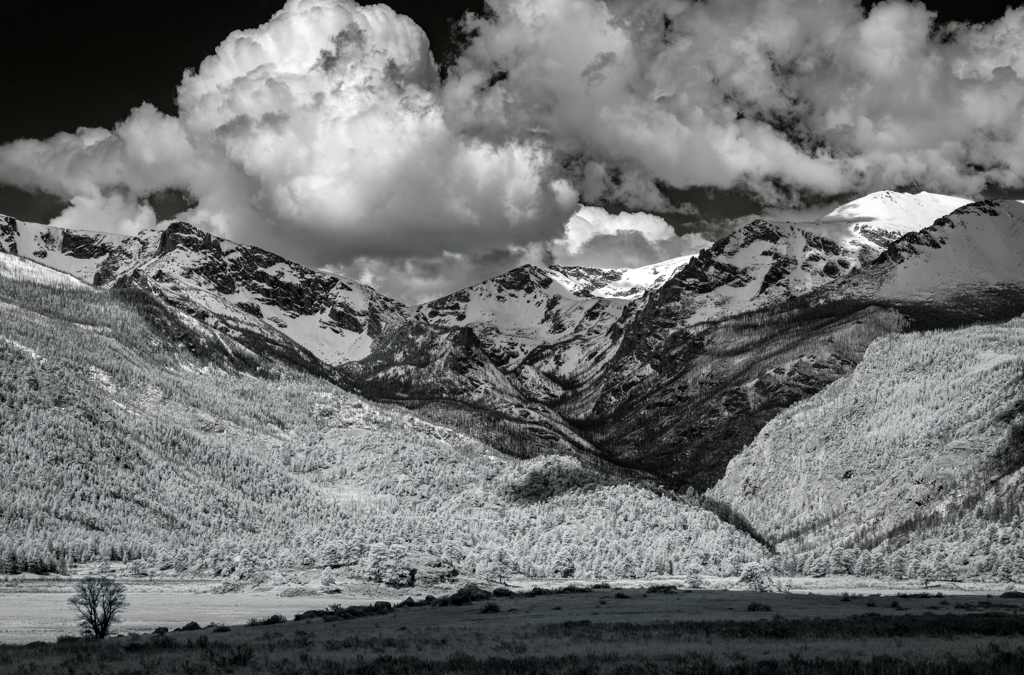
    During my May 2025 trip to Rocky Mountain National Park, I set up near Moraine Park with my infrared-converted camera to capture a different side of the Rockies. From this vantage point, the rugged ridges funnel the eye toward the heart of the Continental Divide, framed by drifting clouds that carried the last breath of winter.

    What infrared does here is transform the familiar into the surreal. The meadows and pines, glowing with that signature silvery light, look almost as though they’ve been dusted with frost, even in spring. Against this brightness, the dark stone faces of the mountains rise like sentinels, their snowfields blending into the luminous IR glow of the forest below.

    The lone tree in the meadow has always caught my eye when I’ve walked this valley — in infrared, it becomes even more symbolic: a quiet anchor in the middle of vastness, dwarfed by scale yet standing apart.

    What I love most about this photograph is the contrast in moods: the dreamlike brilliance of the landscape against the weight of storm clouds rolling overhead. It’s both otherworldly and deeply rooted in place — a reminder that the Rockies are never just one thing, but always a balance of extremes.