[rank_math_breadcrumb]

Day: January 3, 2026

  • Alien Lovers

    Alien Lovers

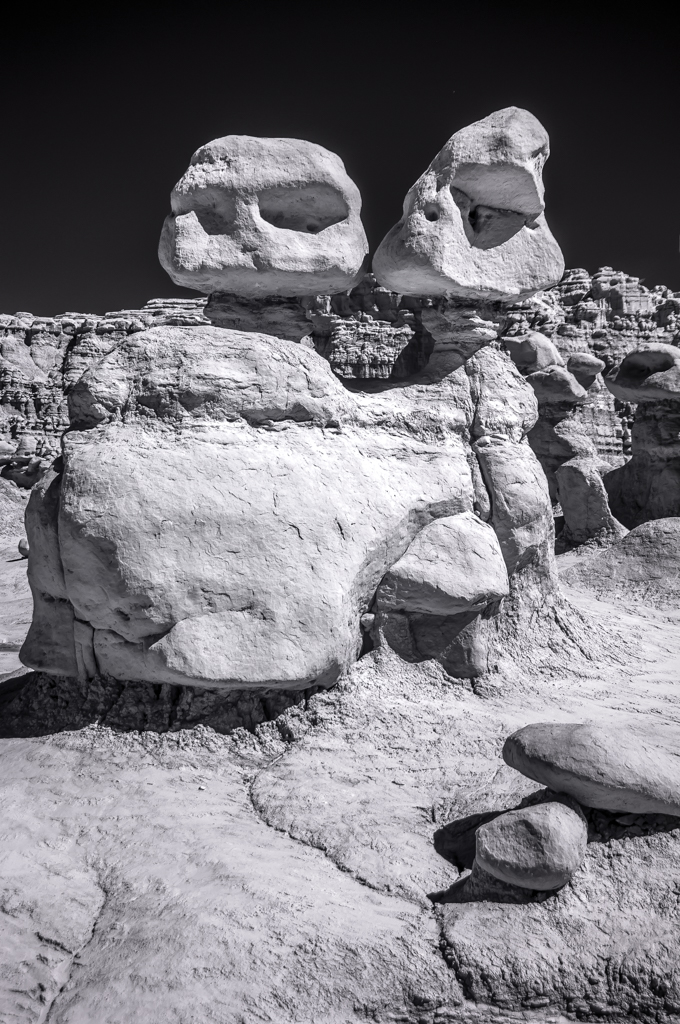
    While road-tripping through Utah, I made a spontaneous stop at Goblin Valley State Park—an otherworldly landscape filled with wind-sculpted hoodoos that resemble creatures from another planet. The park’s name is well earned; it feels like stepping into a Martian playground carved by time and weather.

    As I wandered through the maze of rock formations, this particular pair of “goblins” caught my eye. There was something oddly tender about the way they leaned into each other—like a couple caught in an eternal embrace, frozen in stone. It felt both intimate and alien, and I knew I had to capture it.

    I photographed the scene using my Nikon D2X, modified for infrared photography. The resulting black-and-white image brings out the texture and contrast in the stone, stripping away color and enhancing the surreal mood of the moment. With the high desert light and infrared effect, the surface almost glows, giving these sandstone figures an eerie, ghostlike presence.

    To me, this shot tells a quiet story of connection in an unlikely place—a pair of stone lovers standing side by side in the heart of Utah’s alien terrai
  • Constellation Park Sepia

    Constellation Park Sepia

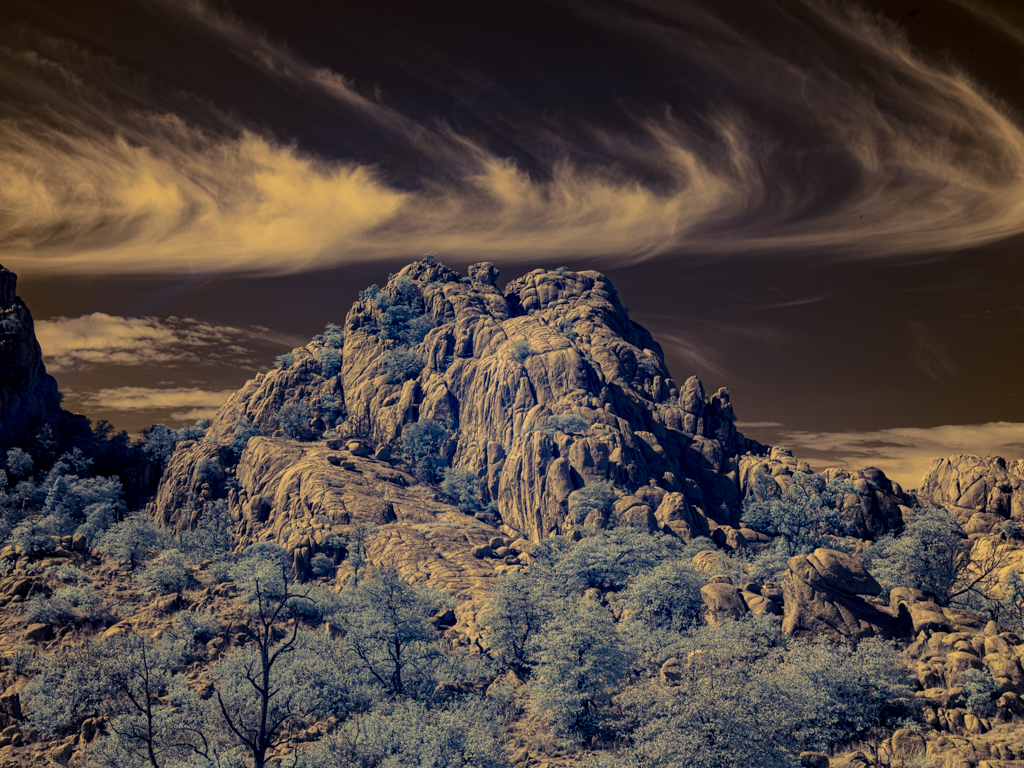
    Captured just outside Sedona, Arizona in Constellation Park, this surreal landscape was photographed using a modified Hasselblad X1D for infrared photography. In this ethereal infrared image, the rugged rock formations glow with otherworldly warmth, while the foliage below—normally rich desert greens—takes on ghostly, cool tones of blue and silver. Above it all, high-altitude cirrus clouds stretch dramatically across a deepened sky, their motion frozen in time like brushstrokes on a vast canvas.

    Infrared photography reveals what the eye cannot see, and in this case, it transforms the Arizona desert into something almost lunar—familiar in form yet alien in mood. The quiet strength of the rocks, combined with the swirling sky and spectral trees, evokes a dreamlike quality that feels more myth than memory.

  • Constellation Park

    Constellation Park

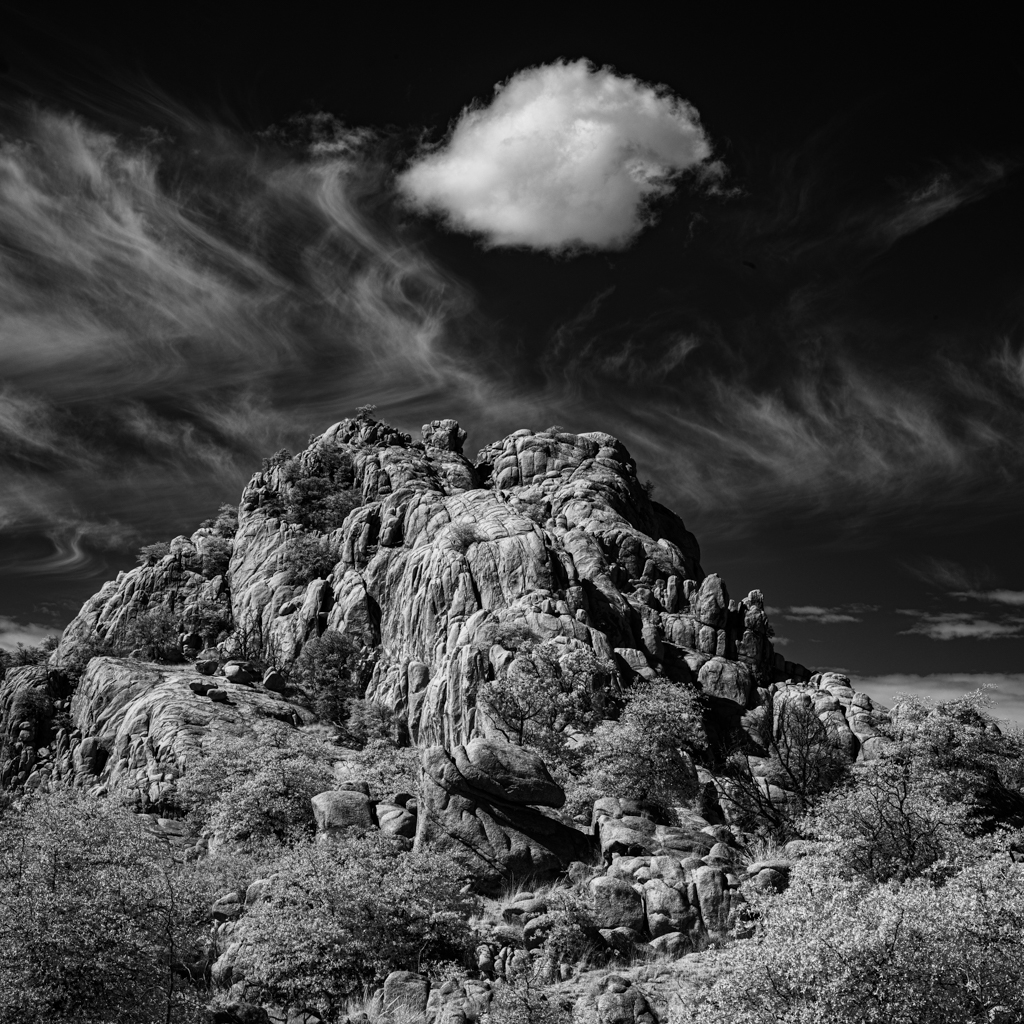
    Captured just outside Sedona, Arizona in Constellation Park, this surreal landscape was photographed using a modified Hasselblad X1D for infrared photography. In this ethereal infrared image, the rugged rock formations glow with otherworldly warmth, while the foliage below—normally rich desert greens—takes on ghostly, cool tones of blue and silver. Above it all, high-altitude cirrus clouds stretch dramatically across a deepened sky, their motion frozen in time like brushstrokes on a vast canvas.

    Infrared photography reveals what the eye cannot see, and in this case, it transforms the Arizona desert into something almost lunar—familiar in form yet alien in mood. The quiet strength of the rocks, combined with the swirling sky and spectral trees, evokes a dreamlike quality that feels more myth than memory.

  • Solitary Sentinel – Joshua Tree in Infrared

    Solitary Sentinel – Joshua Tree in Infrared

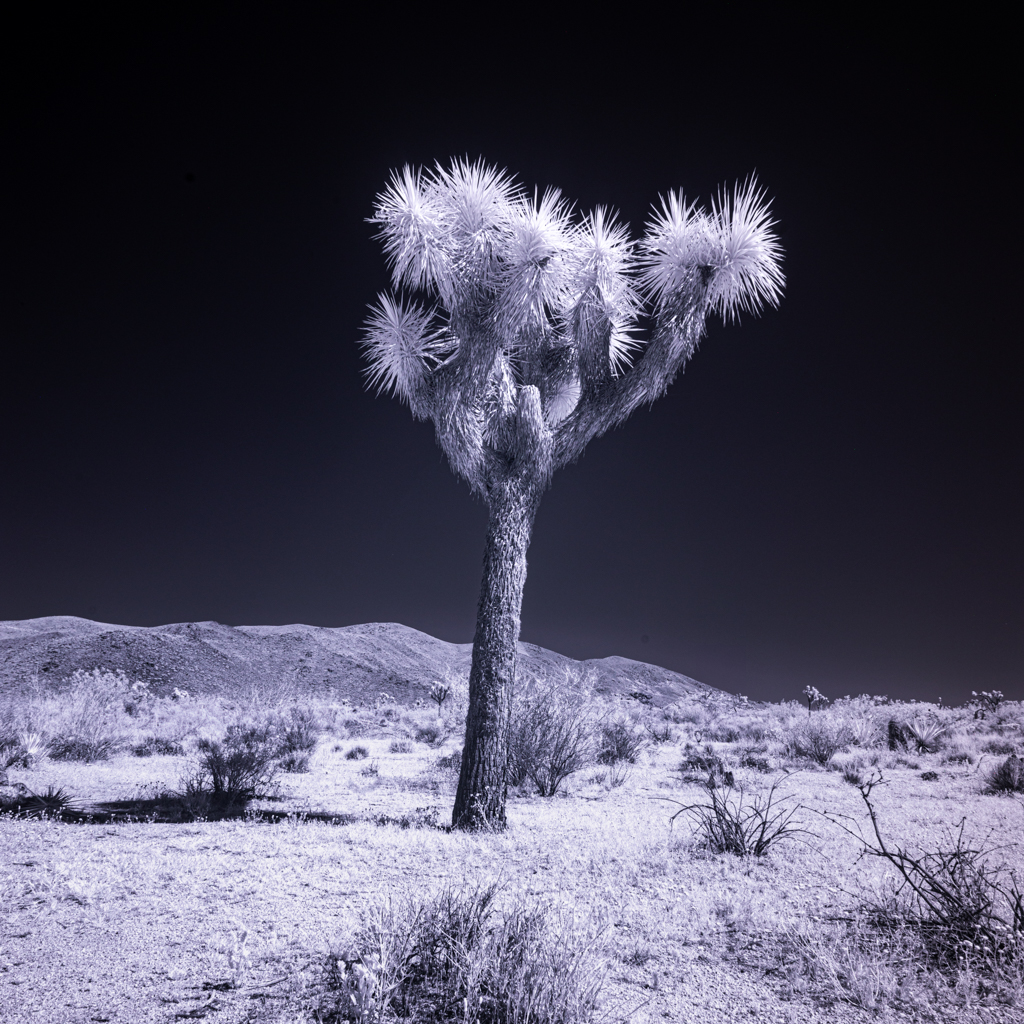
    Captured in the heart of Joshua Tree National Park, this surreal image transforms the desert landscape into something otherworldly. Using a Nikon D800 converted for infrared photography, I was able to reveal the stark beauty of the desert in an entirely new light.

    The Joshua Tree, a symbol of resilience and wild elegance, stands alone against a backdrop of gently rolling hills and a nearly black sky—an effect created by the deep infrared spectrum. The spiky foliage glows with an ethereal, icy tone, while the texture of the bark and desert scrub becomes hyper-detailed, giving the scene an almost alien quality.

    Infrared photography at Joshua Tree offers a dramatic reinterpretation of the familiar. Where the sun-bleached sand and blue skies typically dominate, the infrared view emphasizes contrast and mood, stripping away color to reveal form, light, and shadow in their purest expressions.

    This image, for me, captures not just a moment in the Mojave—but the essence of isolation, strength, and beauty in one of America’s most unique landscapes.

  • The Long Road – Monument Valley in Infrared

    The Long Road – Monument Valley in Infrared

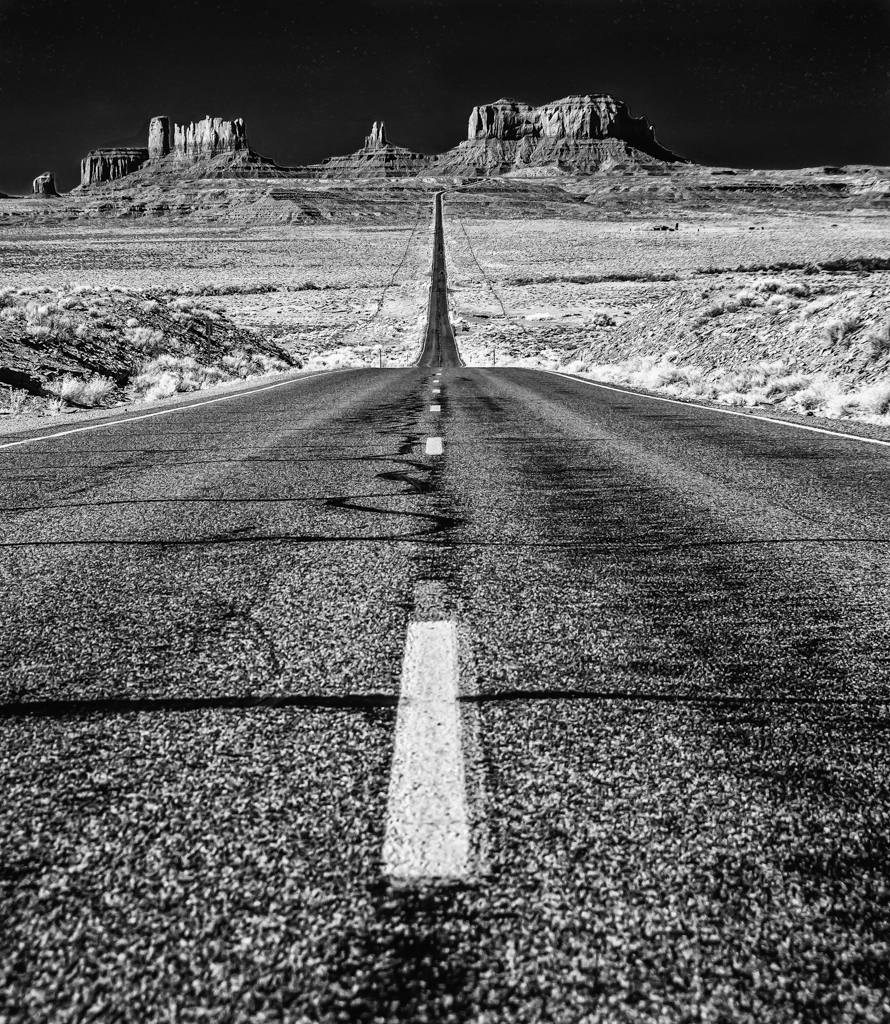
    Shot with a Nikon D2X converted for infrared photography, this image captures the legendary view from Forrest Gump Point on Highway 163—where endless road meets timeless landscape. This stretch between Monument Valley and Mexican Hat, Utah, is etched in cinematic history as the spot where Forrest Gump famously stopped running, with the buttes of Monument Valley standing solemn in the distance.

    In the infrared spectrum, the familiar transforms. The asphalt shimmers with alien intensity, while the desert terrain turns ghostly white, and the sky deepens into a void of stark black. Monument Valley’s towering sandstone formations rise like silent sentinels from another world, frozen in time and shadow.

    The composition—perfectly centered on the broken white line—pulls the viewer down the road into the surreal horizon, symbolizing both a journey through the American West and a passage through visual imagination.

    This isn’t just a photograph of a place made famous by Hollywood—it’s a reimagining of an icon, filtered through the lens of infrared light and a camera that still holds up in a digital world driven by megapixels.

  • Desert Sentinel – Joshua Tree in Infrared

    Desert Sentinel – Joshua Tree in Infrared

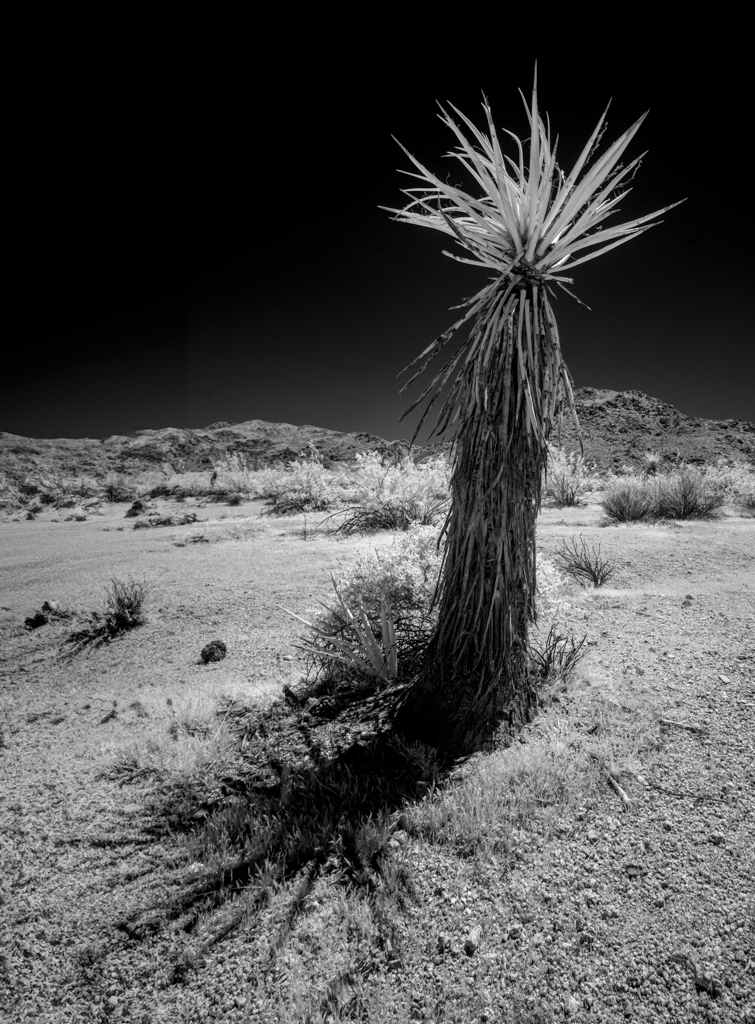
    In the high desert of Joshua Tree National Park, the sun bears down relentlessly, and even the hardiest plants take on an otherworldly beauty. This infrared image transforms the stark reality of the Mojave into something dreamlike—where the sky turns jet black, the scrub glows white, and the yucca tree stands alone like a quiet sentinel.

    Shot with an infrared-converted camera, this photograph highlights the reflective properties of desert flora, exaggerating contrast and revealing textures invisible to the naked eye. The strong midday shadows deepen the drama, while the deep black sky creates a canvas of high-desert minimalism.

    Joshua Tree is a place of extremes—heat and stillness, life and emptiness. This image is part of our Americana Project, capturing the strange beauty and solitude found in some of the most iconic landscapes of the American West.

  • Desert Relic in Infrared

    Desert Relic in Infrared

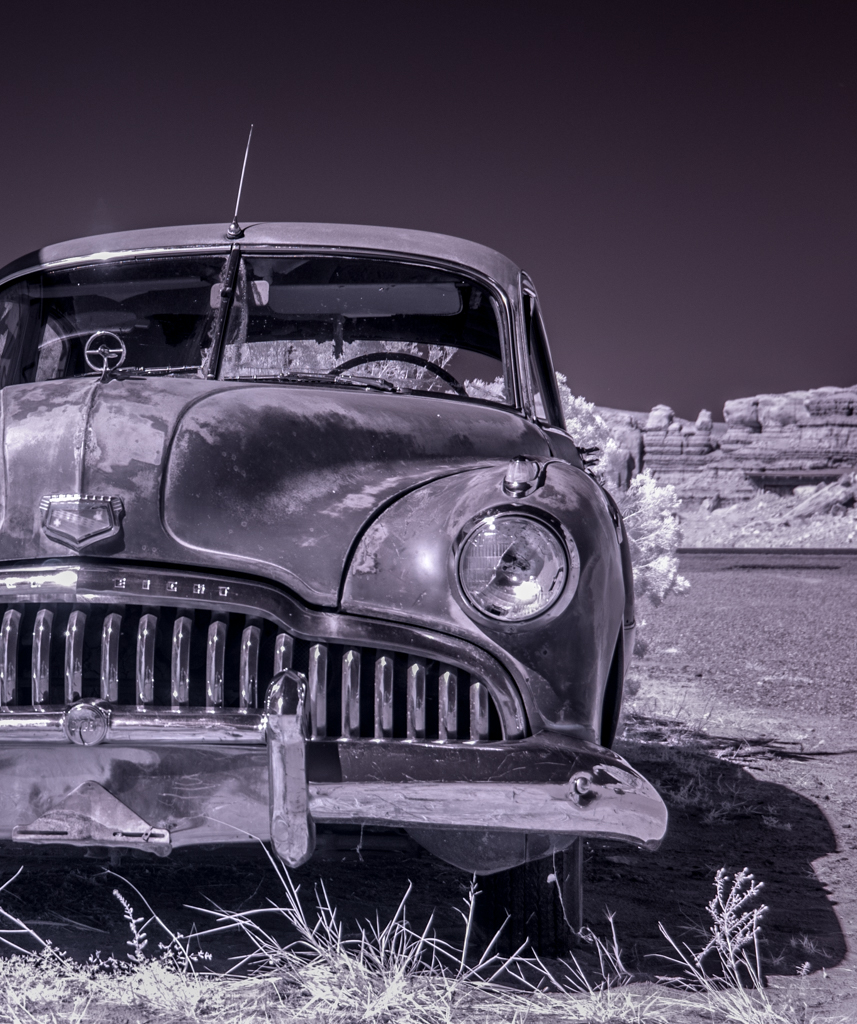
    Just outside of Mexican Hat, Utah, along a quiet stretch of road near what appeared to be an abandoned building labeled “Cow Canyon Trading Post,” I came across this rusting beauty from a bygone era. The desert sun had long since faded its paint, shattered its glass, and stripped it of its purpose—but not its presence.

    Shot in infrared, the scene takes on an almost ghostlike quality. The car feels suspended between decades, its chrome grin peeking through the silence of red rock country. There’s a certain dignity in how it sits—worn but unyielding, a relic that still holds the road in its own way.

    These are the kinds of discoveries I treasure on my photography journeys: moments when time, texture, and technology come together to tell a story that’s part documentary, part dream.

  • Infrared Light in Moraine Park – Rocky Mountain National Park

    Infrared Light in Moraine Park – Rocky Mountain National Park

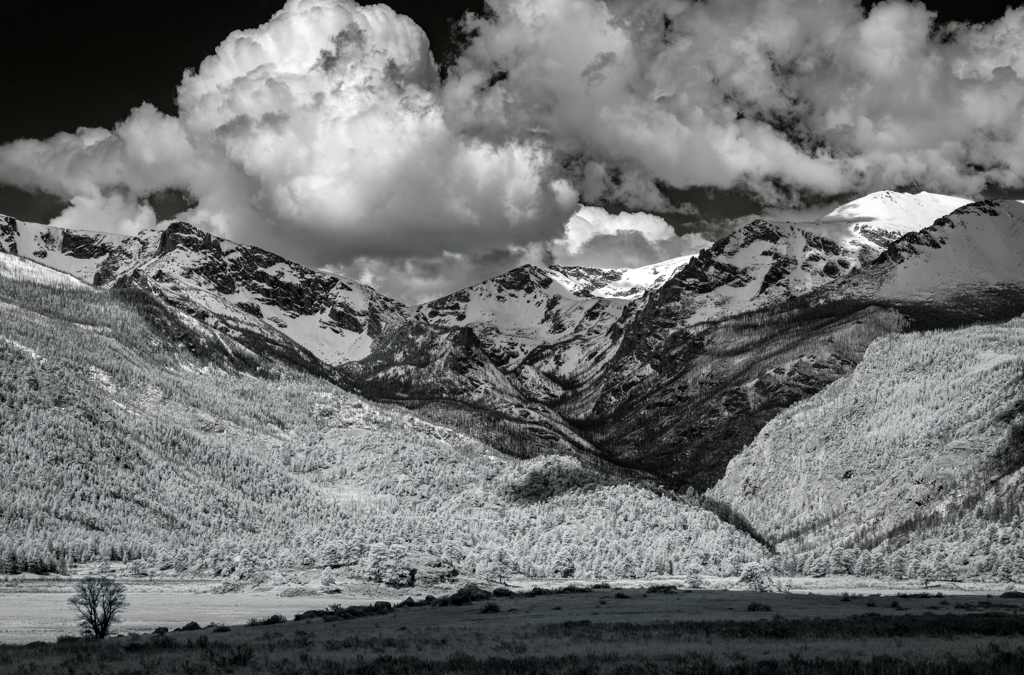
    During my May 2025 trip to Rocky Mountain National Park, I set up near Moraine Park with my infrared-converted camera to capture a different side of the Rockies. From this vantage point, the rugged ridges funnel the eye toward the heart of the Continental Divide, framed by drifting clouds that carried the last breath of winter.

    What infrared does here is transform the familiar into the surreal. The meadows and pines, glowing with that signature silvery light, look almost as though they’ve been dusted with frost, even in spring. Against this brightness, the dark stone faces of the mountains rise like sentinels, their snowfields blending into the luminous IR glow of the forest below.

    The lone tree in the meadow has always caught my eye when I’ve walked this valley — in infrared, it becomes even more symbolic: a quiet anchor in the middle of vastness, dwarfed by scale yet standing apart.

    What I love most about this photograph is the contrast in moods: the dreamlike brilliance of the landscape against the weight of storm clouds rolling overhead. It’s both otherworldly and deeply rooted in place — a reminder that the Rockies are never just one thing, but always a balance of extremes.

  • Timeless Light – Trinity Park in Infrared

    Timeless Light – Trinity Park in Infrared

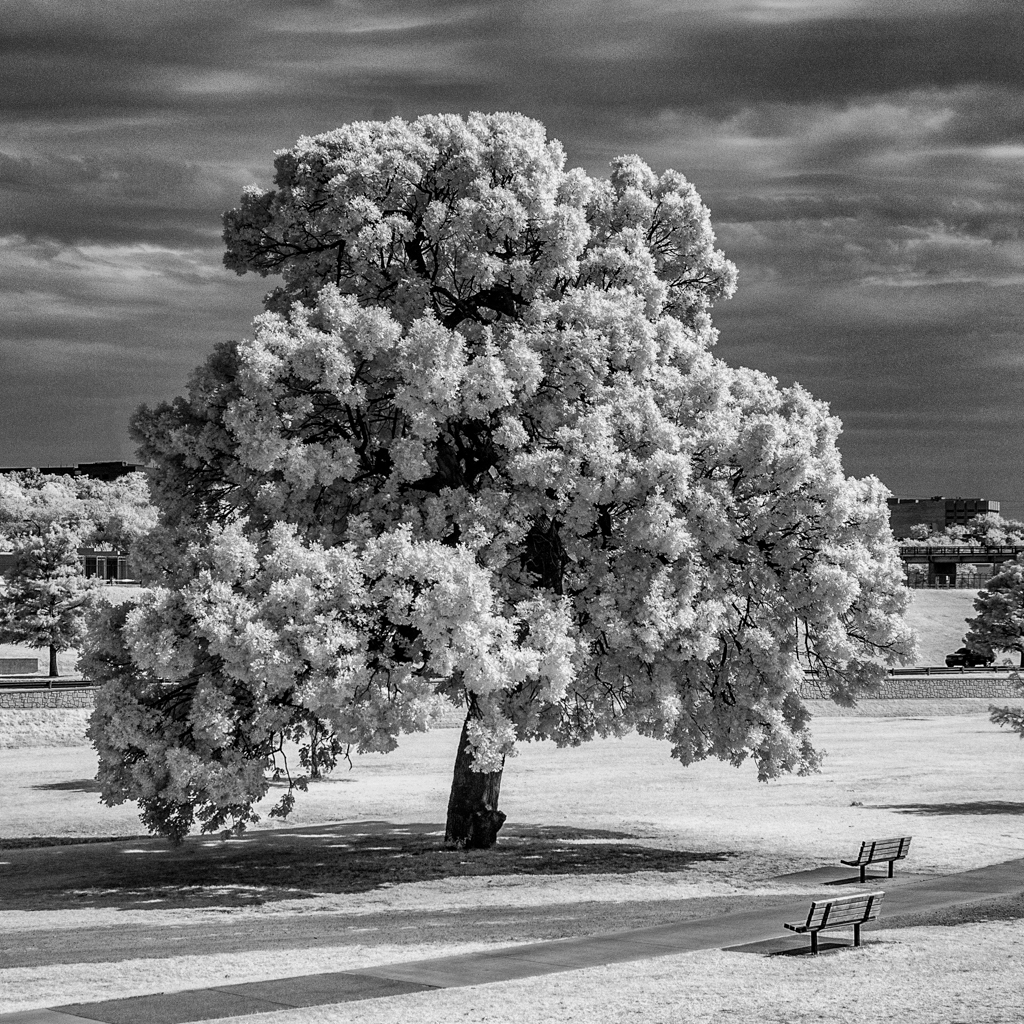
    This majestic tree in Fort Worth’s Trinity Park took on an entirely new personality through the lens of my infrared camera. Shot in black and white infrared, the chlorophyll-rich leaves reflect infrared light, turning the canopy into a glowing cloud of white, like nature’s own sculpture against a brooding sky.

    Infrared photography allows us to see a world that exists just beyond human sight — a parallel landscape filled with unexpected tones and textures. In this case, it transformed a familiar Texas park into a dreamlike realm. The soft shimmer of the tree’s foliage contrasts beautifully with the dark grass and moody clouds, creating a composition that feels suspended in time.

    The empty benches and curving path add a quiet narrative — a peaceful pause, an invitation to sit and ponder beneath the shade of this spectral giant.

    Captured in Trinity Park, Fort Worth — one of my favorite urban green spaces — this image reminds me of how photography can reveal magic in the ordinary.

  • Bear Creek Boutique — Morrison, Colorado (Infrared)

    Bear Creek Boutique — Morrison, Colorado (Infrared)

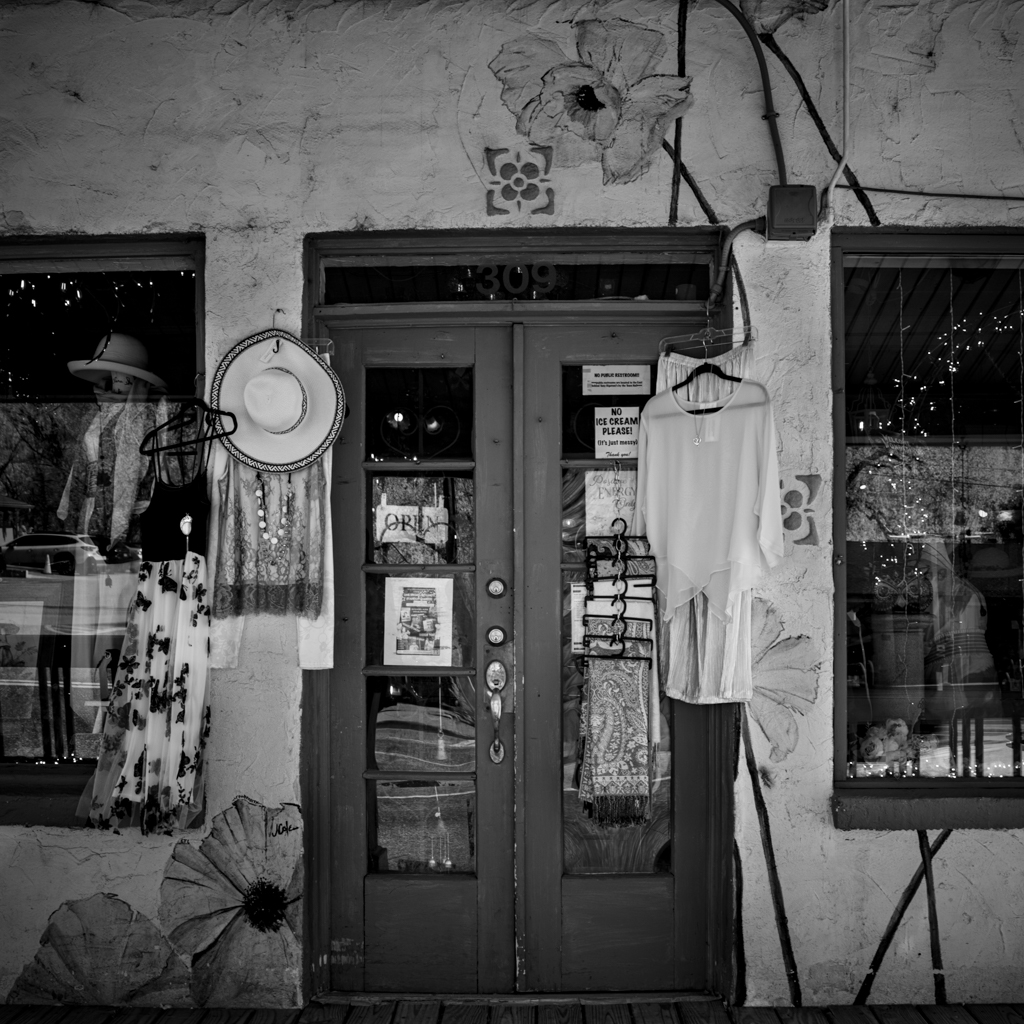
    A quiet storefront on Bear Creek Road in Morrison, CO—captured in infrared on our way to a Red Rocks concert and the last stop before heading into Rocky Mountain National Park.

    I love stumbling into small towns right before a big adventure. We’d booked a night at Cliff House Lodge in Morrison—just down the road from Red Rocks Amphitheatre—and wandered Bear Creek Road at golden hour. This little boutique at 309 stopped me in my tracks: stucco walls painted with oversized flowers, twinkle lights in the windows, and a pair of garments framing the doorway like stage curtains. It’s pure small-town Americana.

    I photographed it with an infrared-converted camera, leaning into the textures and symmetry. In IR, the stucco takes on a porcelain glow while the door woodwork and window reflections settle into deep midtones. I centered the door for a formal, poster-like read; the hat on the left and blouse on the right act as bookends.

    It’s a small scene, but it holds the feel of Morrison—unhurried, welcoming, and just a few bends in the road from epic red rock walls and a night of music.